Visit Bukchon Hanok Village
without being “That” Tourist
If you close your eyes and picture classic, postcard-perfect Seoul, you’re probably picturing Bukchon Hanok Village 북촌 한옥 마을.
Nestled between Gyeongbokgung and Changdeokgung palaces, this neighborhood is packed with hundreds of beautifully restored Joseon-era wooden homes (Hanoks).
It’s easily one of the most atmospheric walks in the city—if you know how to navigate it right.
The view
Start heading up the hill to Bukchon.
The Ultimate Seoul Frame: Keep your camera ready. There’s alleyway vantage point where sweeping traditional giwa tile roofs frame modern skyscrapers and N Seoul Tower right in the background. It’s the ultimate contrast between old and new Seoul.
What Makes a Hanok So Cool?
These aren't just pretty old buildings—traditional Korean architecture is pure genius.
The Shape:Most hanoks are built in single-story 口 (square) or ㄷ (U-shape) layouts around a private inner courtyard (madang). This isn't just for privacy—the open central courtyard creates natural airflow to keep the house cool during humid Korean summers, while shield-like outer walls block harsh winter winds.
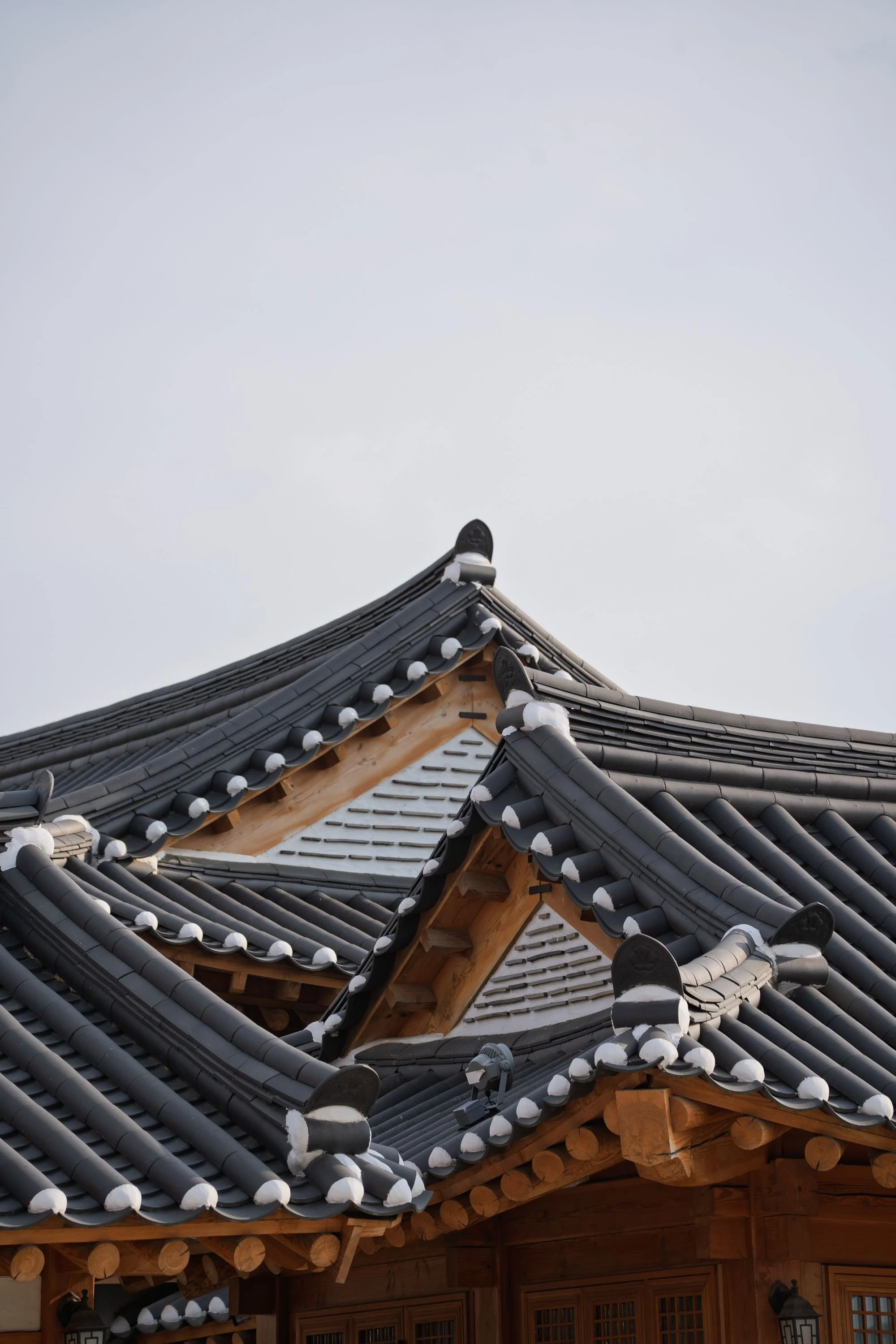
Giwa Roofs:Look up and you'll see graceful, sweeping dark clay tiles. These signature curved lines aren't just for aesthetic flair—the pitch and weight of the giwa tiles are engineered to shed heavy monsoon rain effortlessly while protecting the timber structure beneath from moisture damage.
Ondol Heating:Korea’s ancient underfloor heating system is absolute magic in the winter. Smoke and heat from a wood fire pass through channels under stone slabs beneath the floor before exiting out a chimney. It keeps the living space cozy from the ground up—the original radiant floor heating!
Maru Flooring:Raised, open wooden hall floors connect the interior rooms directly to the outdoors. Situated to catch passing breezes, the maru acts as an organic, open-air living room where families could escape the summer heat without ever stepping outside.
Zero Nails:The most impressive engineering secret? Authentic hanoks are built entirely using interlocking wooden joints (daemokjang)—meaning zero nails or screws are required! This flexible design allows the timber to expand, contract, and absorb ground movement naturally, helping these structures stand sturdy for centuries.
Insider Tip: Don't Be That Tourist
Bukchon isn't an open-air museum—it is a real, living residential neighborhood!
Lower the volume: Sound carries fast down these narrow brick alleys, so keep your voice down.
Respect privacy: Resist the urge to peek into open doorways or photograph private courtyards.
Watch the clock: Tourist entry to residential zones is strictly restricted after 5:00 PM so locals can enjoy their evenings in peace.
Where to Refuel Nearby
Anam (안암): Michelin Guide-approved and totally worth the hype. They serve a rich, deeply comforting pork soup with rice (dwaeji-gukbap). Expect a long wait, but your stomach will thank you.
Lowroof (로우루프): The ultimate spot for a modern caffeine and sugar break. They specialize in French pastries with a Korean twist—whatever you do, get the Yakgwa Financier. It’s dense, chewy, honeyed perfection.
Level Up: Sleep in a Hanok
Want to make your trip truly unforgettable?
Skip the standard high-rise hotel for a night and stay right inside a Bukchon hanok. Picture warm ondol heated floors, plush traditional bedding, and waking up to a quiet, sunlit courtyard right in the heart of the capital.
[Click here to check availability and book your Hanok stay]
